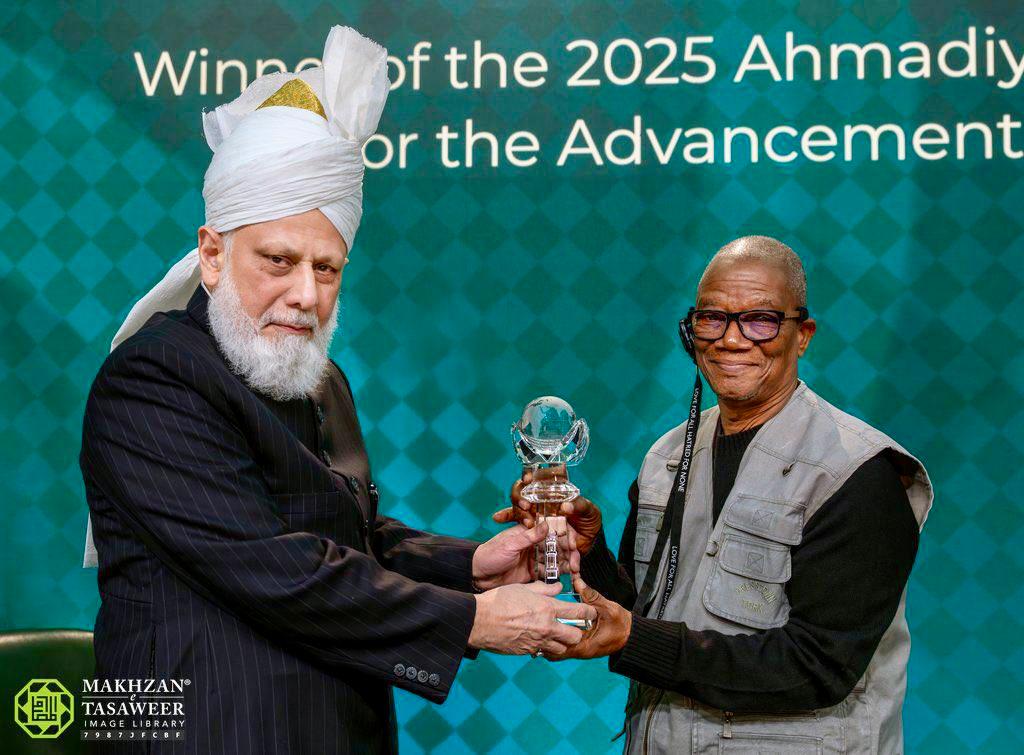
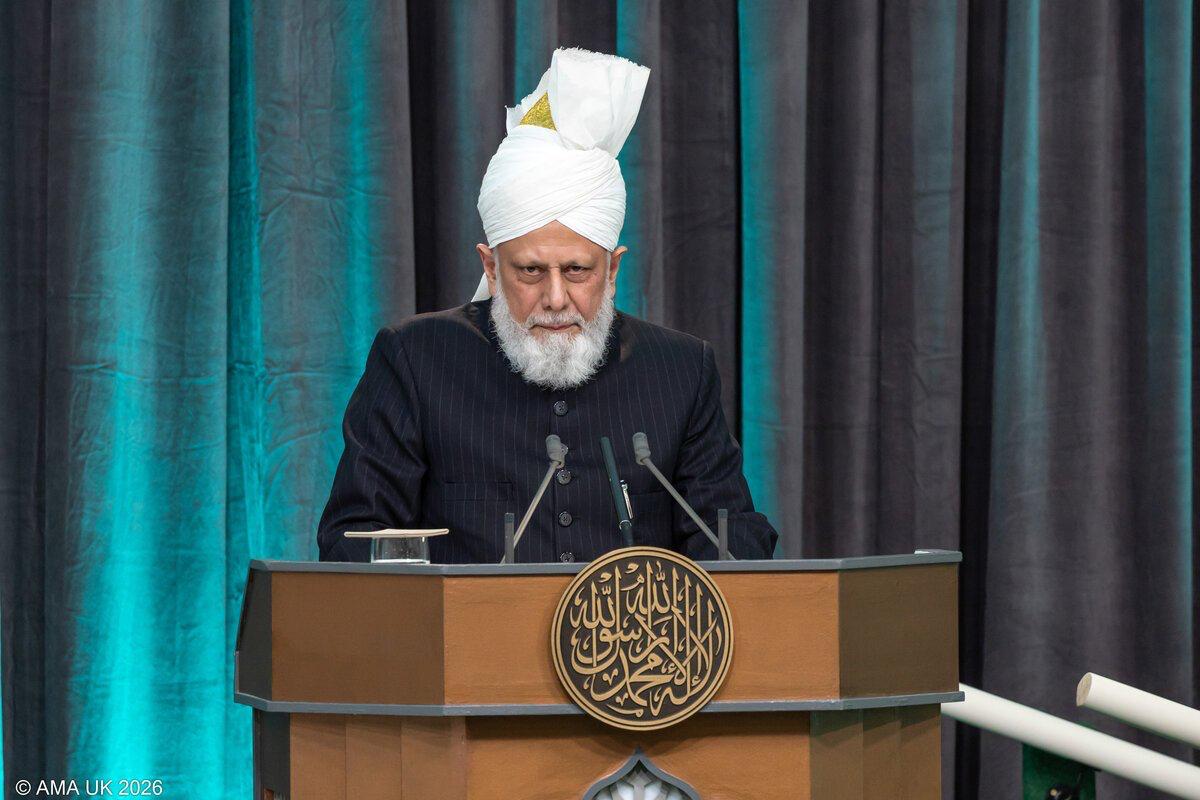
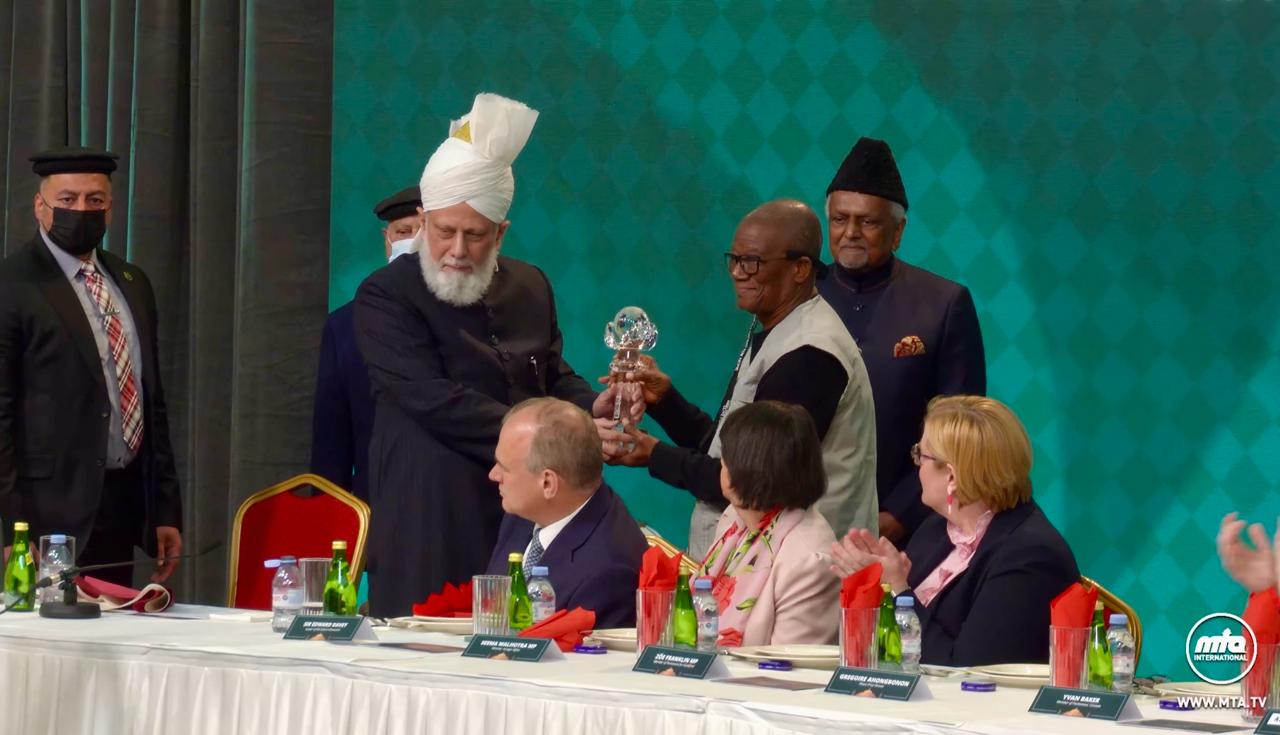
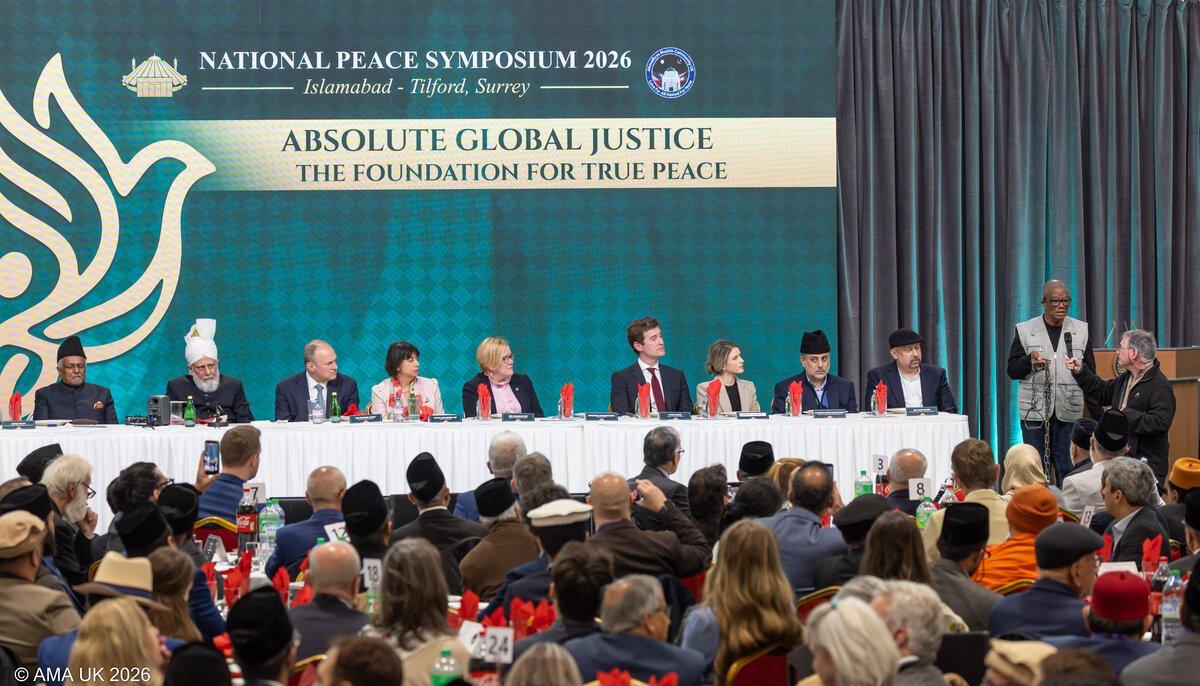
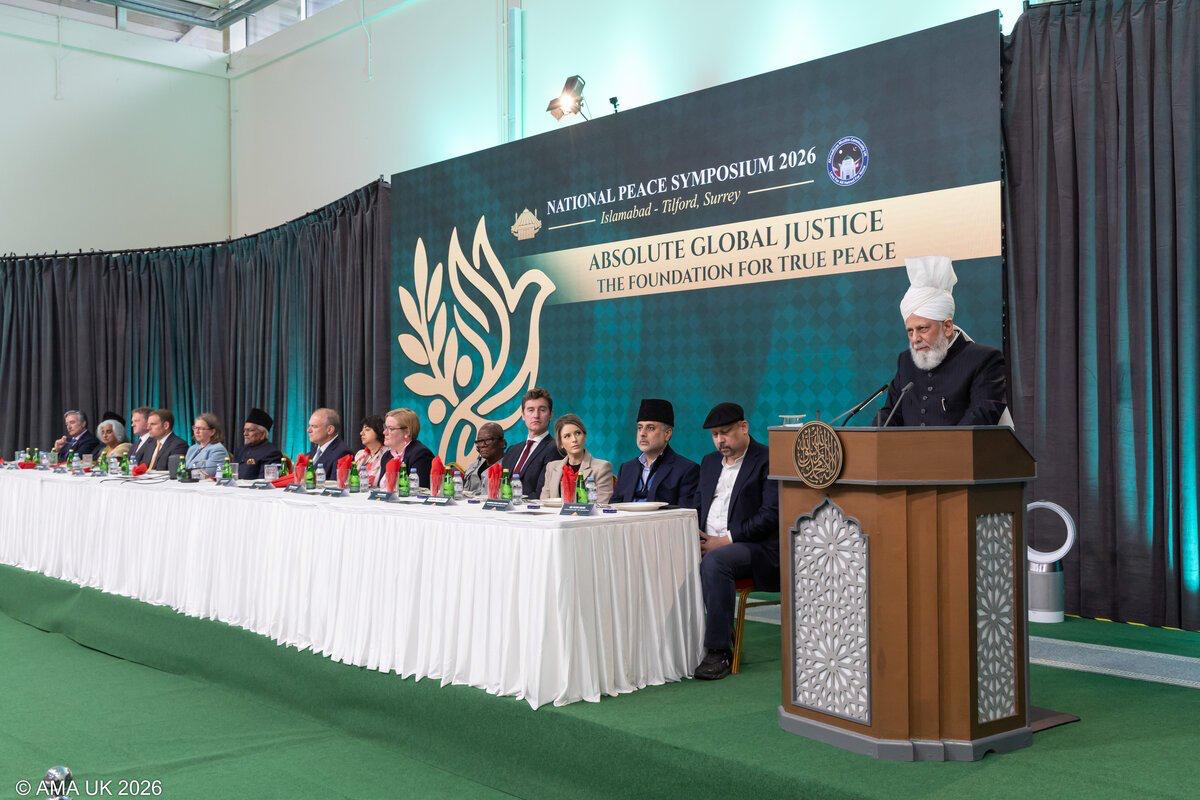
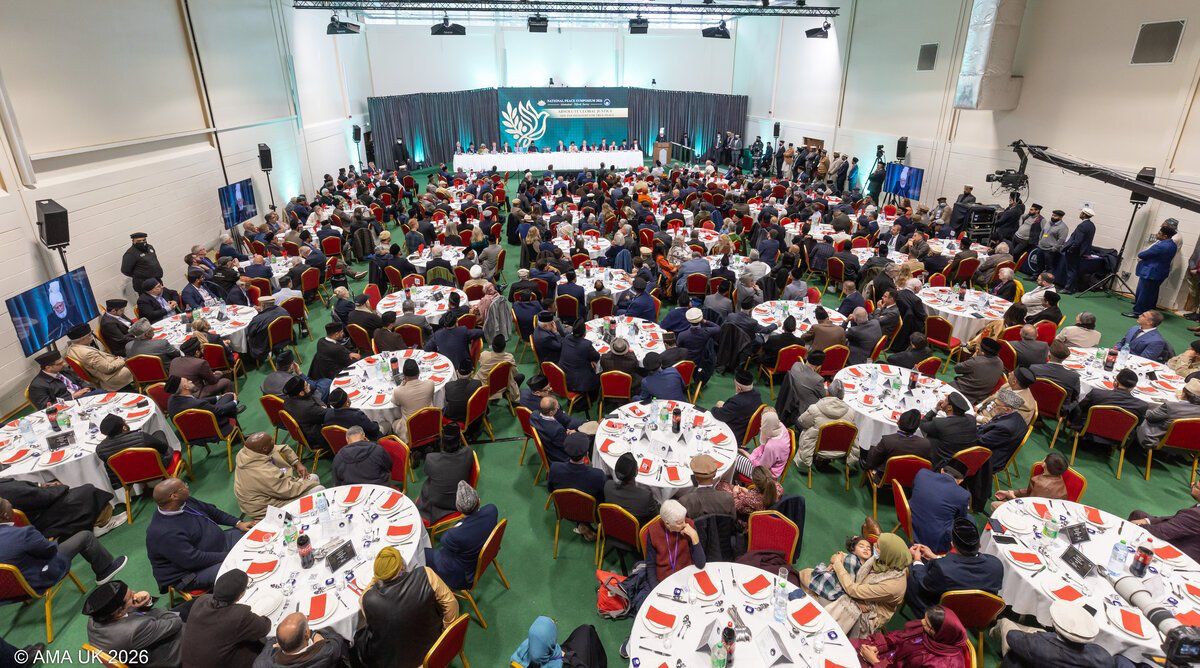
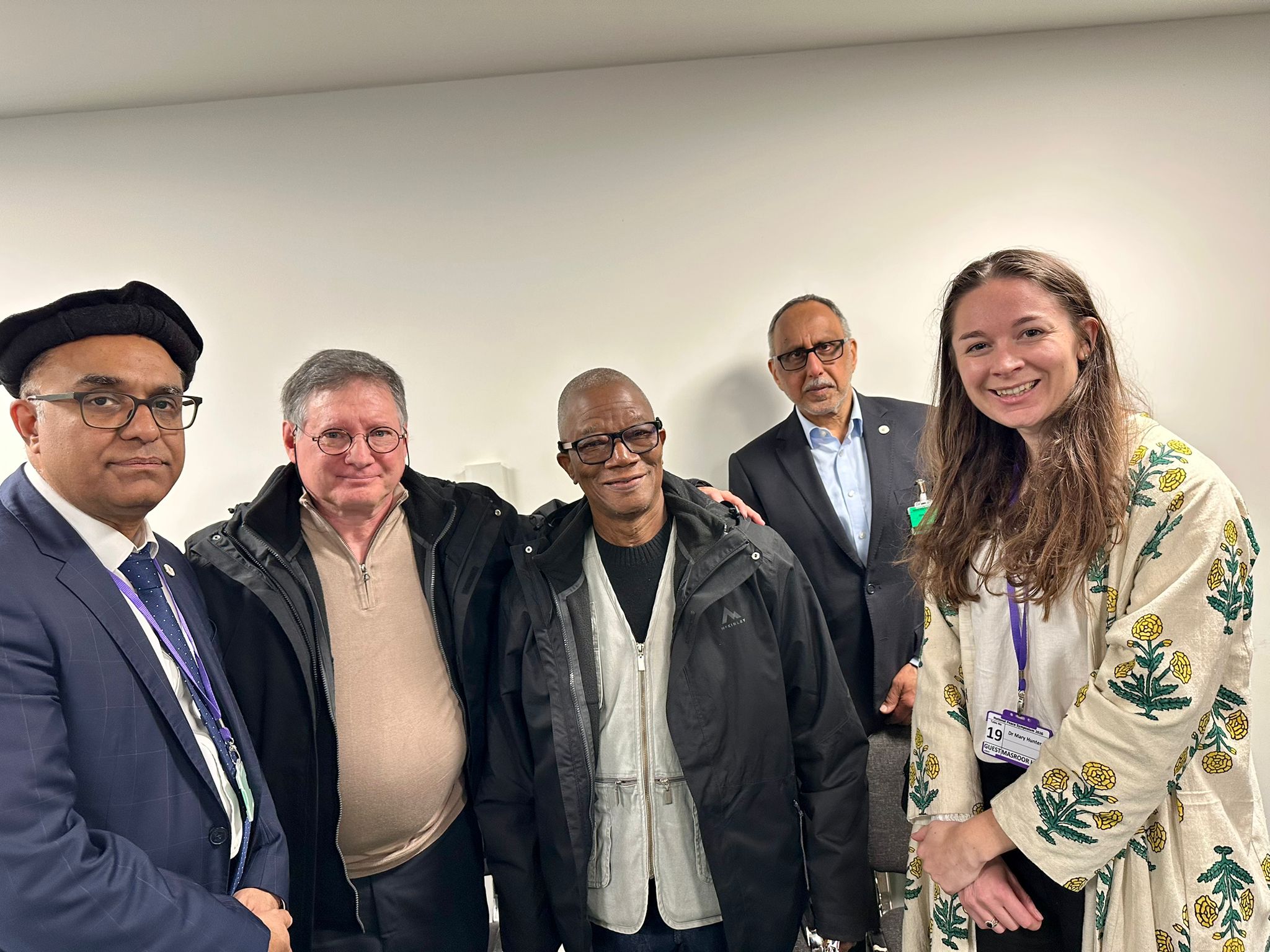
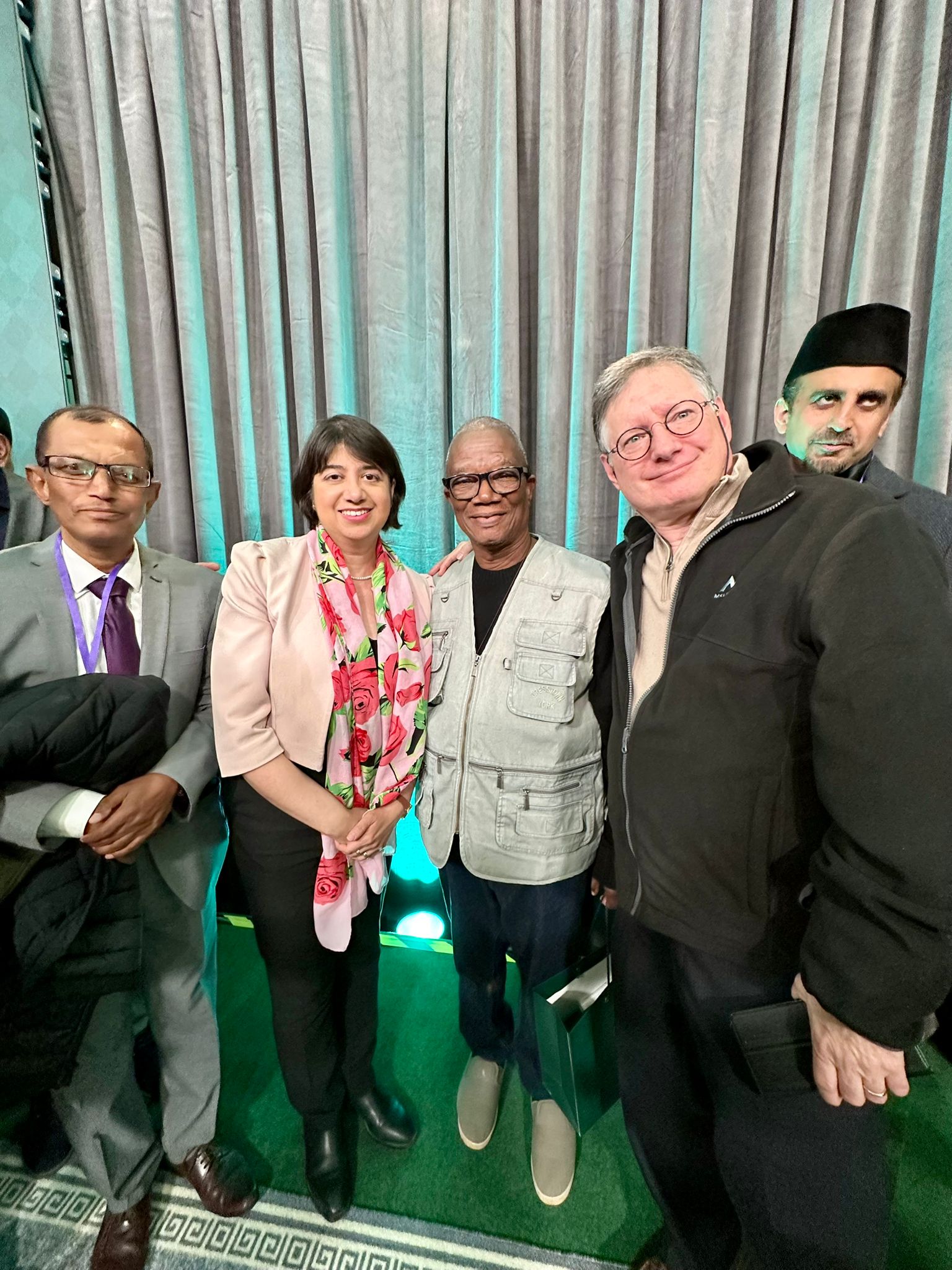
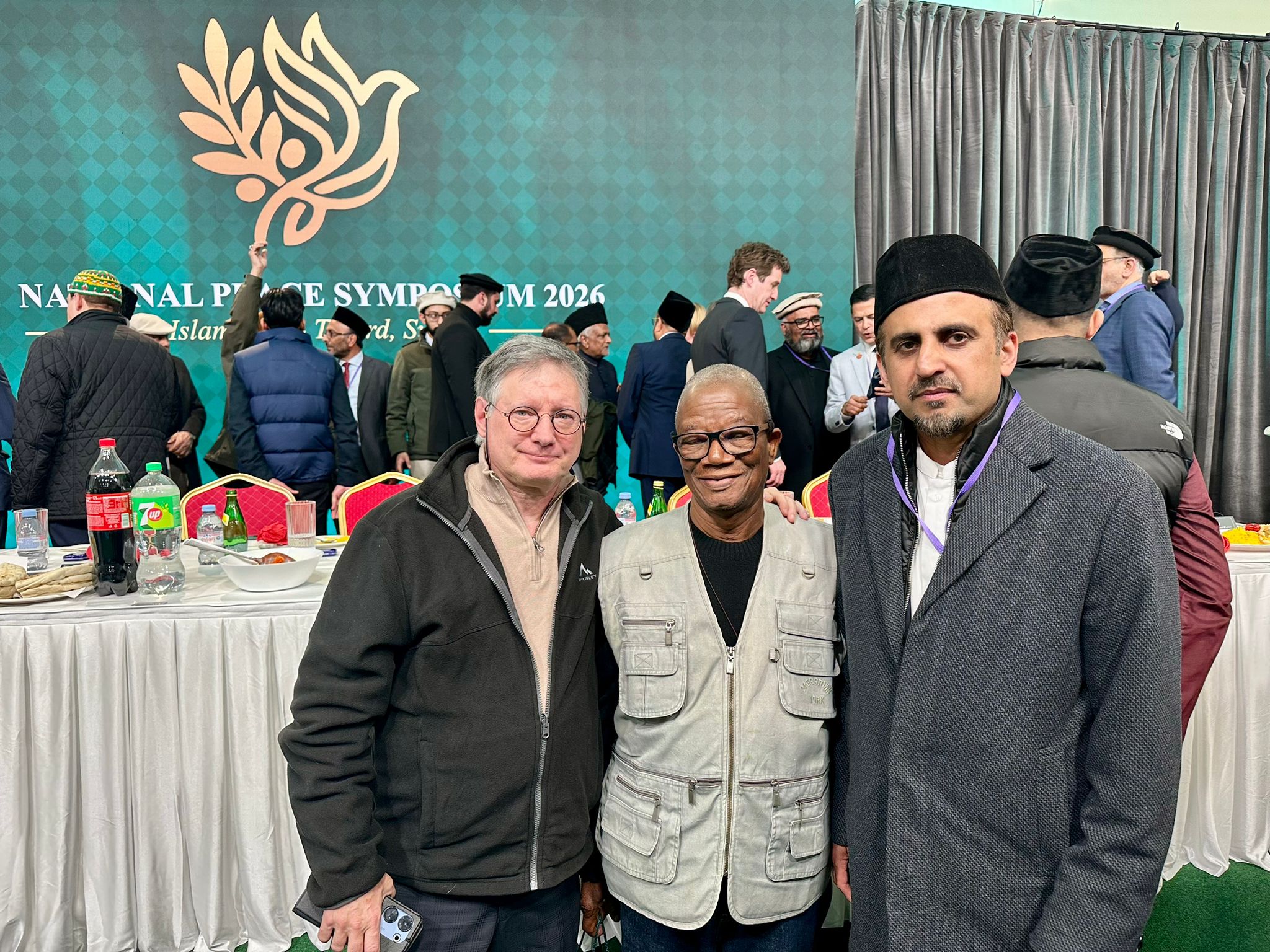
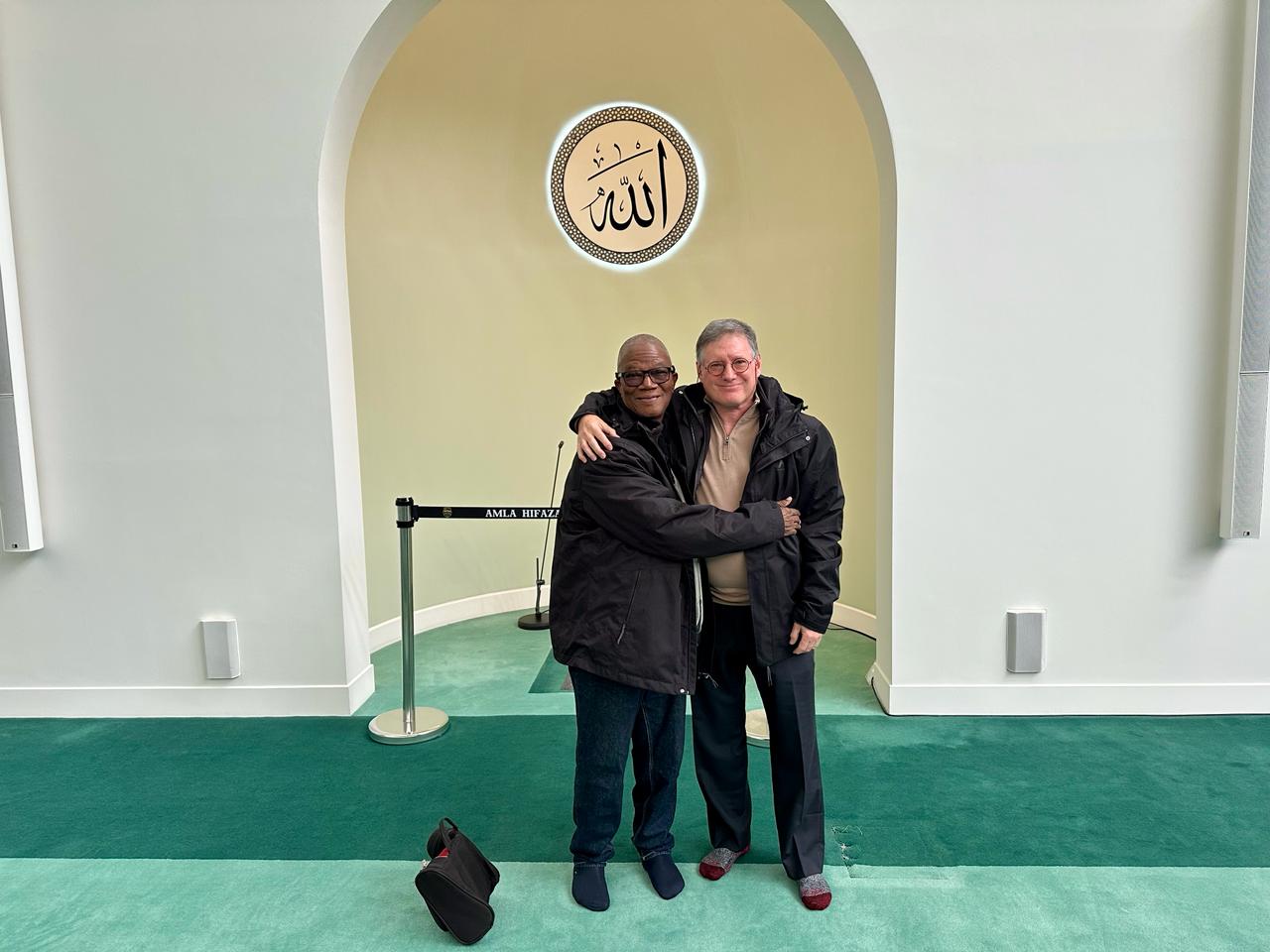
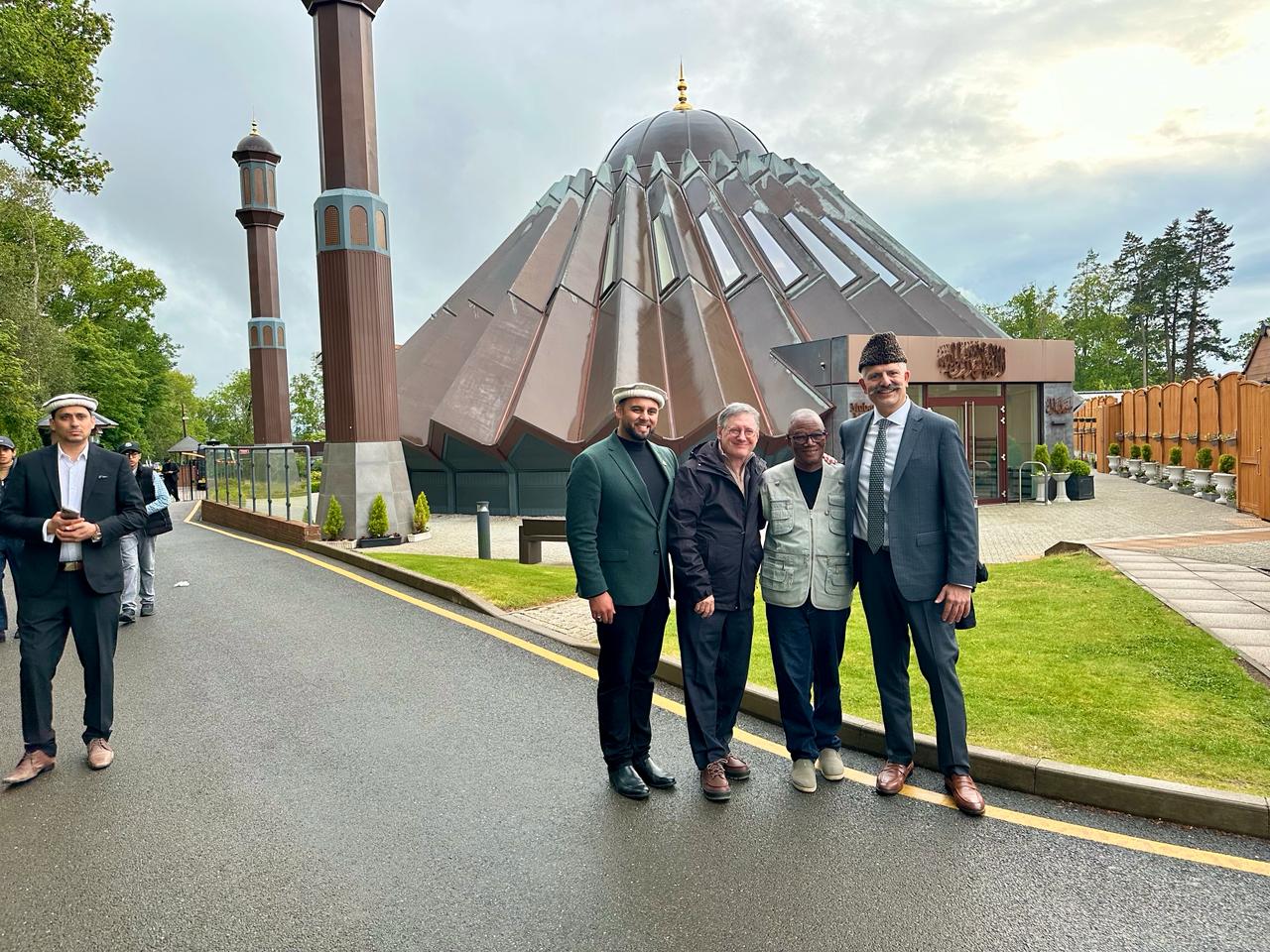
On Saturday, May 16, 2026, at the 19th International Peace Symposium hosted by the Ahmadiyya Muslim Community at Masroor Hall, located within the Baitul Futuh Mosque complex in London—one of the most important mosques in Western Europe; Grégoire Ahongbonon received the prestigious “Ahmadiyya Muslim Prize for the Advancement of Peace”.
This high-level international event brought together parliamentarians, religious dignitaries, political representatives and guests from several countries. Broadcast globally, the Symposium also reaches millions of members and supporters of the Ahmadiyya Muslim community, present in more than 200 countries. Faithful to its motto, “Love for all, hatred for none”, this community has for decades promoted universal values of dialogue, solidarity and peaceful coexistence.
The name of Grégoire Ahongbonon was selected from a long list of international candidates committed to the service of humanity. The final decision falls to His Holiness Hazrat Mirza Masroor Ahmad, global spiritual leader of the Ahmadiyya community, who was looking for a person entirely dedicated to peace, justice and serving the most vulnerable.
For several decades, the Saint-Camille-de-Lellis Association has been working on the African ground through a vast network of reception, care and rehabilitation centers, allowing thousands of men and women suffering from mental illnesses to regain hope, dignity and access to appropriate care. It is this concrete, discreet and persevering commitment that the international community has chosen today to highlight.
During his speech at the Symposium, Grégoire Ahongbonon recalled a fundamental conviction: true peace cannot be built without particular attention paid to the most fragile people. Excluding the vulnerable from thinking about living together is building an incomplete peace.
Beyond the person of its founder, it is the entire mission of the Saint-Camille-de-Lellis Association which is honored by this distinction: a mission based on love of neighbor, compassion, active listening and unconditional respect for human dignity. This recognition constitutes renewed encouragement to continue, with humility and determination, the service of the most deprived.